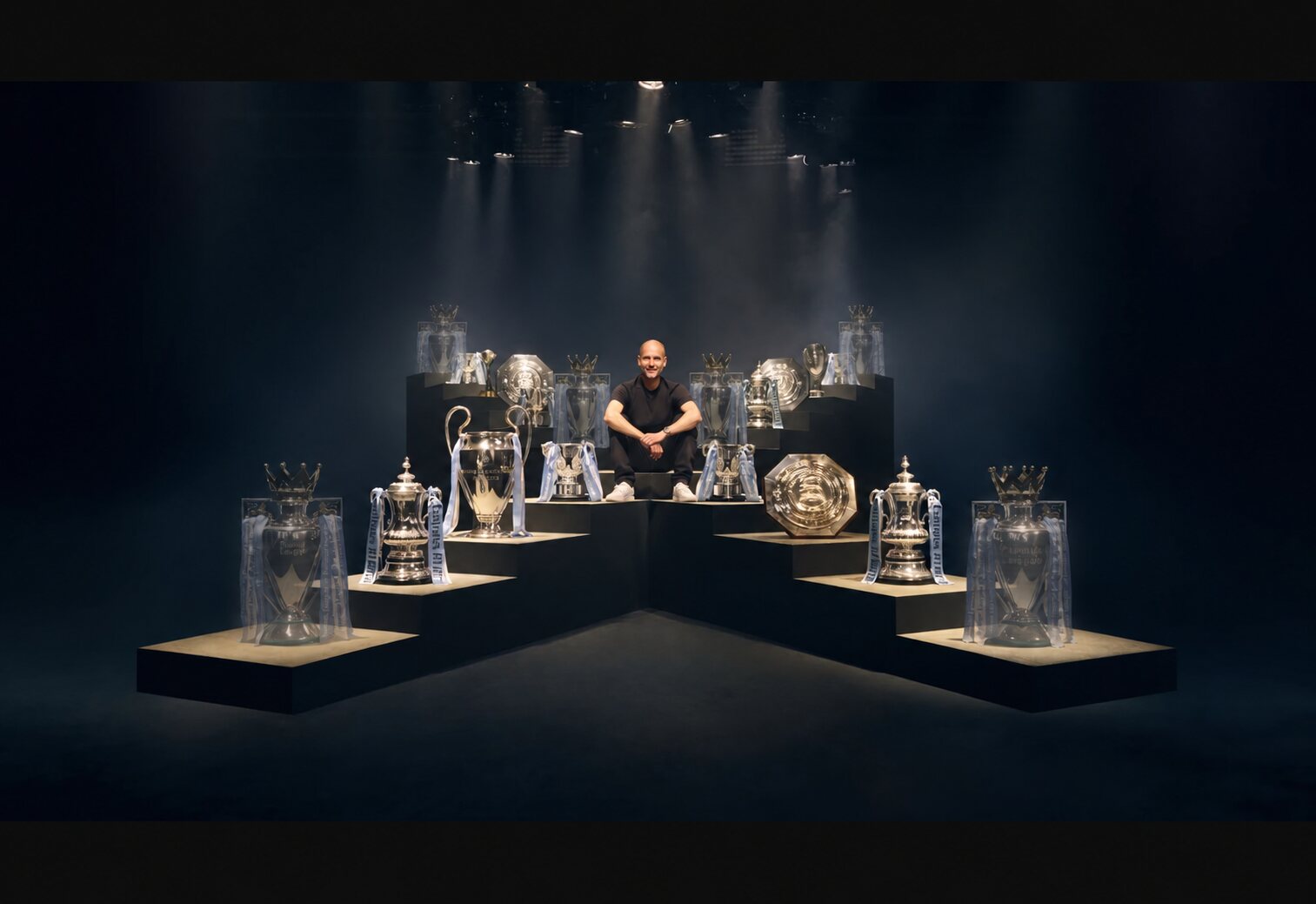
Manchester City’s sponsor portfolio does not show a club that has somehow out-sold the biggest names in world football. It shows a club whose headline commercial figures depend on an unusually asset-heavy Etihad package and a narrow group of UAE-influenced partners, alongside PUMA. Just 16.8% of the valued portfolio comes from everyone else.
That distinction matters because fair-value models tend to reward visible inventory. The shirt, stadium name, academy campus, LED boards, social posts, hospitality, training kit and a long list of smaller logo placements can all be counted. A model built by Marcel Cordes, formerly of Sport+Markt, Repucom and Nielsen, is deliberately detailed in that way: it attaches a value to the sponsorship assets a partner receives.
The weakness is obvious. More assets can mean a higher modelled value without necessarily meaning a better commercial outcome for the sponsor. In a related-party arrangement, the temptation is to keep adding inventory until the valuation reaches the desired level. At that point, the exercise risks counting logos rather than impact.
That is why the reported finding on 114 Premier League charges is now a sponsor story. Forget the trophy handover for a moment. The question is whether City’s commercial architecture was genuinely priced by the market, or designed to produce numbers that could be defended as market value. City can appeal, but commercial directors will not wait for the final page of the legal process before opening their contracts. They will ask what happens to their deal if titles disappear, bonuses are challenged, or City’s place in the Premier League itself comes under threat.
The relegation scenario changes everything
Relegation is now on the spreadsheet. It would take an enormous points deduction or the even more extreme sanction of expulsion. It is not the likeliest destination, but it is a scenario every City sponsor has to model.
One season in the Championship would turn a global premium property into a very different product overnight: no Premier League broadcast reach, no Champions League, far fewer major international fixtures, less retail momentum and a weakened case for every activation built around winning. The contracts may call that a material change, a fee-reduction event, a make-good exercise or an exit right. The labels matter less than the commercial reality. A partner paying elite-football prices would not be receiving elite-football inventory.
Strip out PUMA and the picture sharpens
SportsGlare’s active-deal snapshot puts 30 valued City agreements at £252.4m a year. PUMA accounts for 37.6%. The broader UAE-influenced group is 45.6%. Everything else, from every other valued partner combined, is just 16.8%.
PUMA is a global sportswear deal, and an important vote of confidence. Remove it and the UAE-influenced group becomes 73.1% of City’s remaining valued portfolio. The rest is only 26.9%. SportsGlare’s UAE-influenced group includes direct state and government ties, Mubadala’s reported minority stake in Revolut, and Ohana’s Abu Dhabi property relationship. The point is plain: the City commercial machine remains deeply connected to the place from which its owner comes.
| Dated SportsGlare database measure | Annualised value | Share of £252.4m valued portfolio |
|---|---|---|
| Etihad, e&, Experience Abu Dhabi and Emirates Palace Mandarin Oriental, grouped by identifiable UAE state or Abu Dhabi government links | £108.6m | 43.0% |
| Add Aldar, whose accounts identify the Abu Dhabi government as an indirect major shareholder | £109.6m | 43.4% |
| Add Revolut, in which Abu Dhabi sovereign investor Mubadala holds a reported minority stake, and UAE developer Ohana | £115.0m | 45.6% |
| PUMA kit-supply agreement | £95.0m | 37.6% |
| Other recorded valued partners | £42.4m | 16.8% |
| Active relationships without a recorded annual value | 10 | Not calculable |
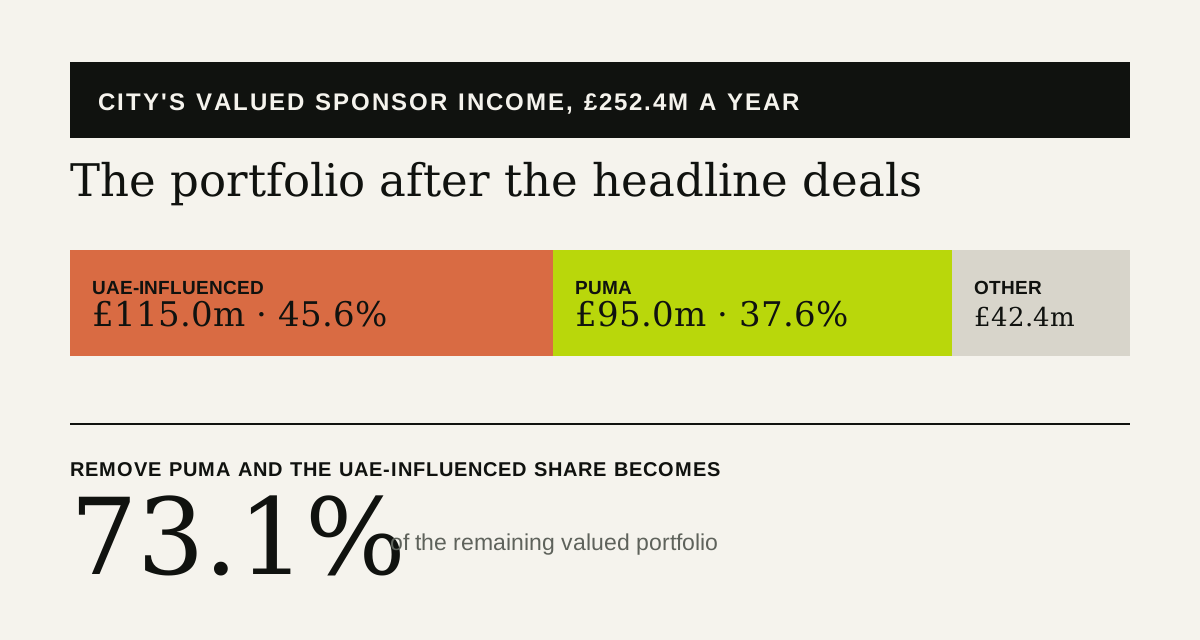
UAE-influenced income includes direct state and government links, Revolut and Ohana. All values are SportsGlare’s dated active-deal snapshot.
The £90m Etihad question
The centre of gravity is Etihad. The airline’s recorded £90m-a-year package covers the shirt, stadium and wider campus relationship. Etihad is wholly owned by Abu Dhabi government holding company ADQ. Experience Abu Dhabi is a government tourism brand. E& is controlled by the UAE federal government. Emirates Palace is owned by an Abu Dhabi public-investment entity. Aldar’s accounts identify Abu Dhabi government interests. Those are not peripheral local partners. They are the commercial architecture around City.
£90m is also the number that makes the fair-value argument uncomfortable. FMV Index puts the Etihad relationship at £60m a year, £30m below the figure in SportsGlare’s deal record. Put City beside Arsenal, Liverpool and Chelsea, clubs with larger global followings and comparable or greater visibility, and the implication is clear: City appear to be paid more for a commercial product the market would ordinarily regard as less valuable.
| Club and partner | Reported annual value | Main rights |
|---|---|---|
| Manchester City and Etihad | £90m in SportsGlare’s deal record. £60m FMV Index estimate | Shirt, stadium and campus |
| Arsenal and Emirates | Up to £70m | Shirt, training kit and stadium naming rights |
| Liverpool and Turkish Airlines | More than £60m | Front of shirt from 2027/28 |
| Chelsea and Circle | Fee not disclosed. Chelsea had sought £50m to £60m | Front of shirt |
The rights packages differ. The pricing puzzle does not. £90m is £30m above the FMV Index estimate and £20m above Arsenal’s new Emirates package, even though Arsenal have a larger worldwide following. Liverpool’s incoming Turkish Airlines deal is reported at more than £60m. Chelsea were seeking £50m to £60m from Circle. City are therefore collecting the biggest cheque of the group despite offering the sponsor the smallest global audience of the four.
Etihad is buying ubiquity: the stadium, the campus, the shirt, the broadcasts and the global City content machine. It is also buying something no ordinary shirt sponsor can access, a club whose ownership story is inseparable from the sponsor’s home emirate. That makes the £90m deal the first number rivals, regulators and sponsors themselves will pull apart if the published commission reasons turn on commercial income.
What former sponsors are already asking
Current sponsors have largely said nothing in public. Privately, the temperature is different. SportsGlare has spoken to people who worked with former City sponsors and asked to remain confidential. They are watching closely and would consider action if titles were not won correctly. SportsGlare has not seen the relevant contracts or any title-bonus clauses, and no claim is known to have been filed.
The target would be the success money. Sponsorship schedules often reward a title, a Champions League run or a particular level of visibility. If a title later disappears from the record, a former partner may argue that a bonus was paid for an achievement that, officially, no longer exists. That is a much sharper claim than asking for every pound spent on shirts, hospitality or advertising over a multi-year relationship.
PUMA is the telling current test. It renewed for 10 years in 2025 in a deal reported at £1bn, and the Guardian reported protections allowing action in the event of serious wrongdoing. Even the biggest independent brand in the portfolio has had to think about what happens when sporting success and conduct no longer travel neatly together.
The money behind the medals
If titles are stripped, sponsorship bonuses are only one pot of money. League prize money will be an obvious question. So will the dressing-room bonuses paid to players and staff for winning trophies.
That is where the story becomes genuinely awkward. A player can say he won the matches, lifted the trophy and did the work. A club or a competition could say the payment depended on an honour that no longer exists. Employment contracts are individual, so there may be no single answer across the squad. Some bonuses may be treated as earned and final. Others could contain integrity, deferred-payment or clawback language. This is likely to create more friction than the sponsor question because it reaches directly into personal earnings.
The Lance Armstrong insurance dispute is a reminder that performance-linked payments can become a recovery battle years later. Football has never had a City-scale test of that proposition. If the titles move, the invoices may follow.
The commercial verdict is still to come
City can still change the legal picture on appeal. It cannot avoid the commercial reckoning that has already begun. The £90m Etihad deal will be interrogated. Former sponsors will revisit title bonuses. Current partners will test their protection clauses. And the prospect of the Championship, however remote, will sit in every valuation model.
This is why the sponsor story matters more than the trophy handover. Manchester City’s success has been monetised as a global business. If the foundations of that success are formally challenged, the club is not just defending a record. It is defending the price of everything built on top of it.
Sources
SportsGlare reporting and data
- SportsGlare research database, All ManCity Deals.xlsx, 26 September 2026. Deal values are research estimates or reported figures unless confirmed by the parties.
Primary sources
- Premier League, 6 February 2023: commission referral statement
- Manchester City: current partner portfolio
- e& 2025 integrated annual report
- Aldar Properties, 2025 audited financial statements
- Etihad / ADQ aviation announcement
- FMV Index: Manchester City / Etihad valuation