The talks have moved closer
Chelsea is still not for sale in the way it was in 2022. There is no public auction or new bidder at the gates. But the reported discussions have moved closer to an internal ownership transfer.
SportBusiness reports that Todd Boehly and Mark Walter are close to agreeing the sale of their Chelsea stakes to Clearlake Capital, after talks advanced in recent weeks. That is a more significant development than the earlier report that the pair were considering an exit.
According to SportBusiness, the ownership agreement gives Clearlake an exclusive option to purchase Boehly and Walter's stakes. If so, this was never really an open auction. The central negotiation has always been between Chelsea's existing partners.
A spokesperson for Walter told Bloomberg that the potential transaction would value his stake at a premium to his initial investment, and that he intends to make further sports-related investments. The statement presents the sale as a profitable portfolio exit, rather than simply a forced disposal.
Walter's wider business empire has also faced scrutiny after his insurers, Delaware Life and Clear Spring Life and Annuity, were subpoenaed by US federal prosecutors and the Securities and Exchange Commission. That investigation concerns the wider business group, not Chelsea. It adds context to the timing, but does not establish why the Chelsea discussions were reopened.
The deal is not complete. The exact price, completion date and Hansjörg Wyss's position remain unclear. But Clearlake now appears close to turning its economic majority into much clearer control.
Clearlake had the majority, but not sole control
The consortium led by Boehly and Clearlake bought Chelsea from Roman Abramovich in 2022. Chelsea said £2.5bn would be used to purchase the club's shares, with the new owners separately committing another £1.75bn for investment in the club.
Those figures should not be combined and called a £4.25bn purchase price. One bought the shares. The other was a promise to fund Chelsea's future.
The structure was unusual from the start. The acquisition announcement said Boehly and Clearlake would have joint control and equal governance. Yet current reporting places Clearlake's economic holding at 61.5 per cent, with Boehly, Walter and Wyss at about 12.8 per cent each.
In other words, the majority of the money and the decisive governance rights did not sit neatly in the same place.
That can work when partners agree. Chelsea's owners, however, have spent much of the past two years attached to the same project while reports described disagreement over sporting strategy and whether to rebuild Stamford Bridge or move elsewhere.
Chelsea ownership, in brief
| 2022 arrangement | If Boehly and Walter sell to Clearlake |
|---|---|
| Clearlake held the reported economic majority. | Clearlake would hold roughly 87 per cent on the reported figures. |
| Boehly and Clearlake had joint control and equal governance. | The precise governance outcome would depend on the private shareholder arrangements and the rights transferred with the shares. |
| Boehly, Walter and Wyss formed the minority investor group. | Wyss's position has not been established by the current reporting. |
The percentages above are press-reported holdings, not a substitute for the private shareholder agreement.
Liverpool did not start the talks. It changed the price conversation
The chronology is irresistible. On 14 August, Fenway Sports Group announced a definitive agreement to sell a minority stake in Liverpool to 1892 Holdings, a consortium led by Amit Bhatia and backed by the Mittal Family Trusts, a K5 Sports fund led by Jeff Bezos, and Elaine and Eduardo Saverin's family office. Three days later, the Chelsea talks were reported.
It would be too neat to say Liverpool caused them. The Chelsea discussions had reportedly resumed over the preceding weeks, and the ownership split was hardly new.
What Liverpool supplied was a live market price.
FSG's official announcement did not disclose the percentage or consideration. Initial reporting put the deal at 30 per cent for £1.65bn, implying a £5.5bn valuation, roughly $7bn. Subsequent reporting said 1892 Holdings had acquired 38 per cent for more than £2bn. The stake needs clarification, but both versions imply a value of roughly £5.3bn to £5.5bn.
For Boehly, that is an obvious comparable. Investors have just accepted a valuation above £5bn for Liverpool while leaving FSG in operational control. A similar number for Chelsea no longer looks like fantasy.
It is still a demanding one.
Liverpool reported £703m of revenue for the year to May 2025, more than £200m above the £490.9m Chelsea reported for the year to June 2025. Liverpool had also completed the expansion of the Anfield Road Stand and won the Premier League. Chelsea still has a stadium problem, followed a successful 2024/25 with a tenth-place league finish in 2025/26, and will play no European football this season.
Chelsea can point to London, a powerful global following, valuable player assets and the growth a larger stadium could unlock. Clearlake can point to the cost and uncertainty of turning that potential into cash.
Liverpool strengthens the case for a £5bn-plus conversation. It does not settle it, or tell us what Boehly and Walter would receive. Debt, shareholder funding, capital injected since 2022 and the treatment of the wider BlueCo structure all matter.
Hansjörg Wyss is the unanswered question
On the reported percentages, buying Boehly's and Walter's stakes would lift Clearlake to roughly 87 per cent. That sounds conclusive, but ownership percentages and governance rights are not always the same thing. Chelsea's own 2022 announcement proved precisely that.
Wyss was a named member of the original consortium and is reported to hold a stake comparable to those of Boehly and Walter. He is not named as a prospective seller.
If he remains, Clearlake may gain an overwhelming economic majority without owning the whole company. Its freedom over board appointments, reserved decisions and the stadium would depend on agreements that are not public. A pooled minority vehicle could complicate the mechanics further.
A Boehly and Walter sale would simplify Chelsea's cap table, but nobody outside the transaction can yet say exactly how simple the result would be.
A record of progress interrupted by another reset
Boehly became the public face of the takeover and briefly acted as interim sporting director. Clearlake's Behdad Eghbali later became more visible around day-to-day football decisions. Managers, recruitment structures and executive roles changed around them.
There have been real successes. Chelsea finished fourth in 2024/25, won the UEFA Conference League and then the FIFA Club World Cup. The club's 2024/25 accounts showed revenue of £490.9m, the second highest in its history.
They also recorded a £262.4m pre-tax loss. The next season brought another head-coach change, a tenth-place league finish and no European qualification. Chelsea called 2025/26 "hugely disappointing". Xabi Alonso now leads the next version of the project.
This is not a record of uninterrupted failure. It is a record of expensive progress repeatedly interrupted by a new argument about how the club should operate.
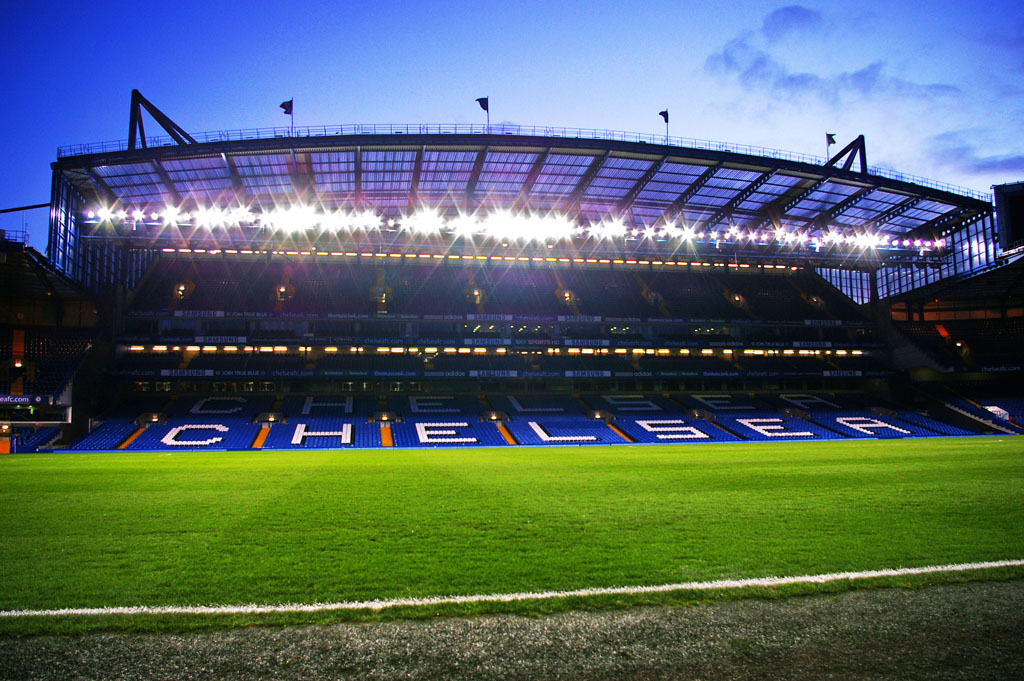
The stadium is the largest unresolved argument. Stamford Bridge constrains matchday income, but rebuilding would be difficult and disruptive. Moving would be politically, financially and emotionally difficult. Boehly said in 2025 that the owners would either align on the stadium or ultimately go their separate ways. His chairmanship is due to rotate to a Clearlake representative at the end of 2026/27.
A sale now would turn that scheduled reduction in influence into a clean break. It would also leave Clearlake without the shared-control structure as an explanation for further delay.
The empty shirt is a smaller version of the same problem
Chelsea's commercial operation offers a visible test of the need for consistency.
The club has again launched a season without a permanent front-of-shirt sponsor. Since Three's agreement ended in 2023, Infinite Athlete, DAMAC and IFS have occupied the space through shorter arrangements. IFS remains a long-term technology partner, but its shirt placement ended with the 2025/26 season.
A blank shirt does not prove commercial incompetence. Refusing to discount premium inventory can be rational. Repeated temporary solutions do, however, invite the question of whether Chelsea is protecting its brand value or struggling to present a stable proposition at the price it wants.
The people leading that effort have changed too. Tom Glick was succeeded by Chris Jurasek, who was in turn succeeded by Jason Gannon as the senior business executive. Casper Stylsvig left as chief revenue officer after two years, with Todd Kline appointed President of Commercial.
Chelsea has now hired Alex Smith from TEAM Marketing as Director of Partnerships, as Smith confirmed in his LinkedIn announcement. His post thanked Todd Kline, Chelsea's President of Commercial, for the opportunity. At TEAM, Smith led the group supporting UEFA's men's club competition sponsors and licensing partners. His experience is directly relevant to Chelsea's commercial task.
One appointment will not solve the shirt or the stadium. Both require a club that can tell partners, planners and supporters what it is building and who has authority to approve it.
One transaction, two opposite ownership lessons
Liverpool and Chelsea are using minority stakes for almost opposite purposes.
FSG has agreed to bring new investors into Liverpool while explicitly retaining majority ownership and operational control. The message is continuity, with added capital, contacts and commercial reach.
Clearlake would be buying investors out of Chelsea to end a structure in which economic ownership and authority were divided. The message would be consolidation.
Liverpool's deal may have made the price of a Chelsea exit easier for Boehly to imagine. It cannot make Clearlake's next decisions for it.
A cleaner ownership structure will not put a sponsor on the shirt, choose a stadium or keep a successful manager. It will do something Chelsea has lacked since 2022: make it much harder for the people in charge to point across the boardroom when those decisions go wrong.
Sources
Alex Smith, LinkedIn announcement confirming his appointment as Director of Partnerships at Chelsea FC, 19 August 2026. Screenshot retained by SportsGlare.
- Financial Times, "Chelsea shareholders Mark Walter and Todd Boehly in talks to sell their stakes to Clearlake", 17 August 2026
- Chelsea FC, "Club statement", 7 May 2022
- Business Wire, "Consortium Led by Todd Boehly and Clearlake Capital Completes Acquisition of Chelsea Football Club", 30 May 2022
- Sky Sports, "Chelsea co-owners Todd Boehly and Mark Walter hold talks over selling shares to majority owners Clearlake Capital", 18 August 2026
- The Guardian, "Todd Boehly and Mark Walter consider selling Chelsea shares to Clearlake Capital", 17 August 2026
- Chelsea FC, "Financial results for 2024/25"
- Chelsea FC, "Chelsea FC announces new business leadership executives"
- Chelsea FC, "Lion takes pride of place as new Chelsea home kit set loose"
- City A.M., "IFS and Chelsea reaffirm partnership but AI firm won't be front-of-shirt", 6 July 2026
- Fenway Sports Group via Liverpool FC, "FSG announces strategic minority investment in Liverpool FC", 14 August 2026
- The Guardian, "Liverpool owner FSG seals £1.65bn sale of 30% stake to consortium including Jeff Bezos", 14 August 2026
- The Times, "Amit Bhatia group owns 38% of Liverpool and can buy majority stake", 19 August 2026
- European Sponsorship Association, "Member Spotlight: TEAM Marketing", 5 June 2023
- Wikimedia Commons, "Stamford Bridge - West Stand.jpg", photograph by Vespa125125CFC, CC BY-SA 3.0
- SportBusiness, "Boehly, Walter closing in on Chelsea exit", 11 September 2026
- The Guardian, "Clearlake Capital close on buying out Chelsea co-owners Todd Boehly and Mark Walter", 10 September 2026
- City A.M., "Chelsea valuation doubles under BlueCo to £5bn as Boehly and Walter eye exit", 11 September 2026