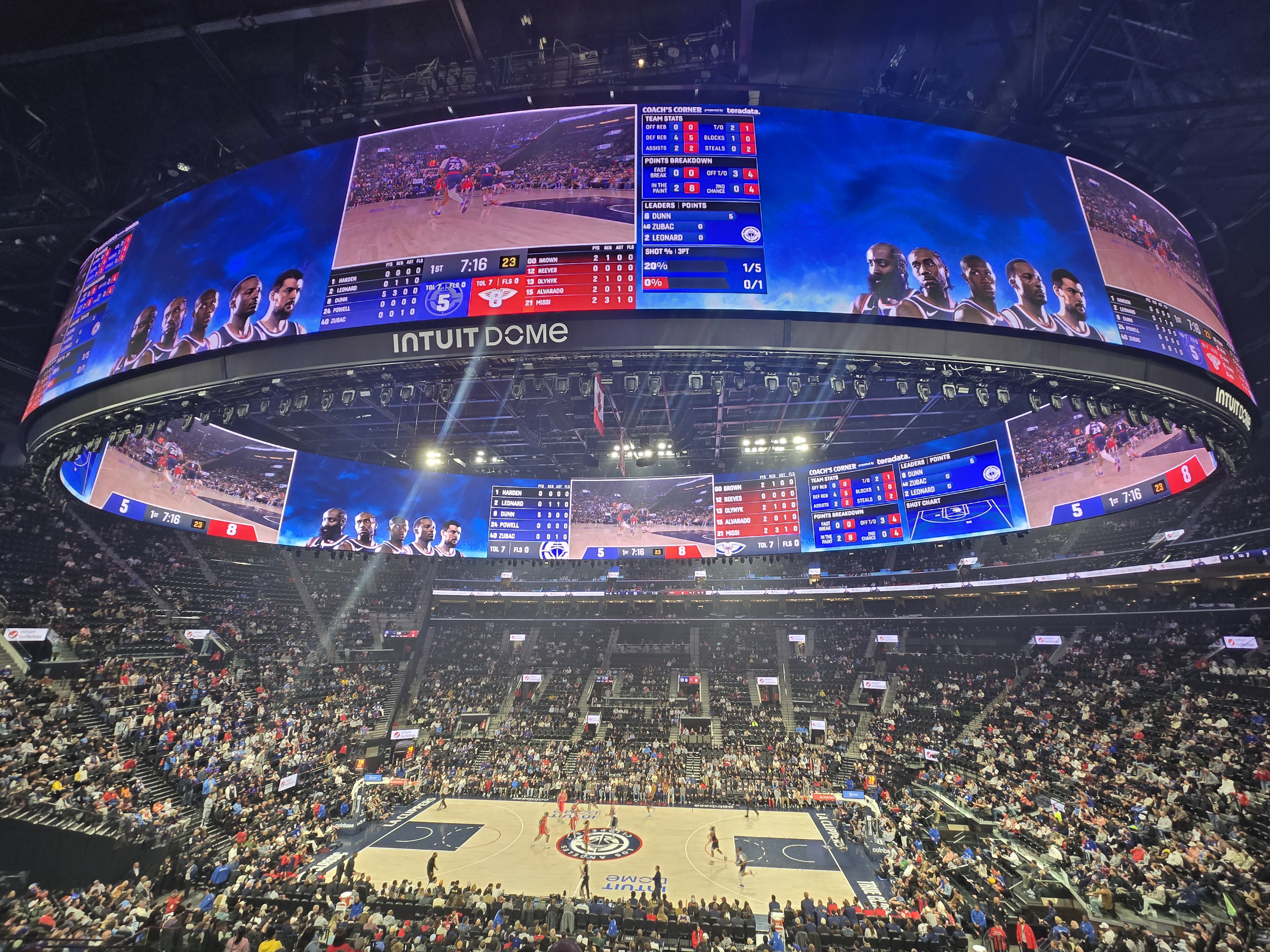
A company competing to supply the Los Angeles Clippers' new arena paid Kawhi Leonard $8m after the team demanded commercial spend back, according to the independent investigation behind one of the NBA's severest salary-cap punishments.
The finding puts Daktronics, the display manufacturer behind Intuit Dome's Halo Board, inside a transaction investigators concluded the Clippers procured in exchange for business awarded to the company.
How the $8m deal was made
The NBA found that the Clippers used the deal, alongside arrangements involving three other companies, to create off-court income for Leonard in breach of the league's collectively bargained circumvention rules. The penalties include five first-round draft picks, a $30m fine, suspensions and five years of compliance monitoring.
While Daktronics was bidding to supply scoreboards and signage, the Clippers named it preferred provider and requested spend back. Investigators found that the team introduced Leonard's representative, set the starting price and linked a larger arena order to a larger player payment. The total was $8m: $3m in the first year and $5m in the second.
When an endorsement becomes cap circumvention
The NBA collective bargaining agreement prohibits a team from giving, arranging or promising a player something of value outside his uniform contract. A business partner may independently ask for a player's contact details; the team may not recommend, initiate, facilitate, induce or assist the deal.
Daktronics has not been sanctioned by the NBA. It is not governed by the league's CBA, and the investigation said it substantially cooperated. The league imposed sanctions on the franchise, its personnel, Leonard and Robertson.
When hardware procurement becomes a sponsorship sale
The case is more than a salary-cap breach. It has the characteristics of procurement corruption: a supplier seeking a landmark contract, a customer demanding reciprocal value and that value being directed to an employee of the customer. A supplier can discount equipment, recover value through sponsorship rights and turn an installation into a reference site. A rival may have to beat the entire commercial package, not the hardware specification.
Adding a player makes the conflict more serious. The NBA concluded that the Clippers used their buying power to secure an $8m payment for Leonard. Combining screens and sponsorship can compromise a clean technology tender; adding a player can turn it into a route around the salary cap.
The SEC question
On 2 September, Daktronics said the Securities and Exchange Commission was seeking information relating to the company and Leonard, and that it was cooperating. The SEC does not enforce the NBA's collective bargaining agreement. Its interest would be in records, controls and required disclosure.
A formal order would be an investigative step, not a finding of liability. The NBA punished a cap workaround. The wider lesson is that clubs cannot claim a clean procurement process if sponsorship value decides the equipment they buy, or if buying power creates off-payroll value for a player.