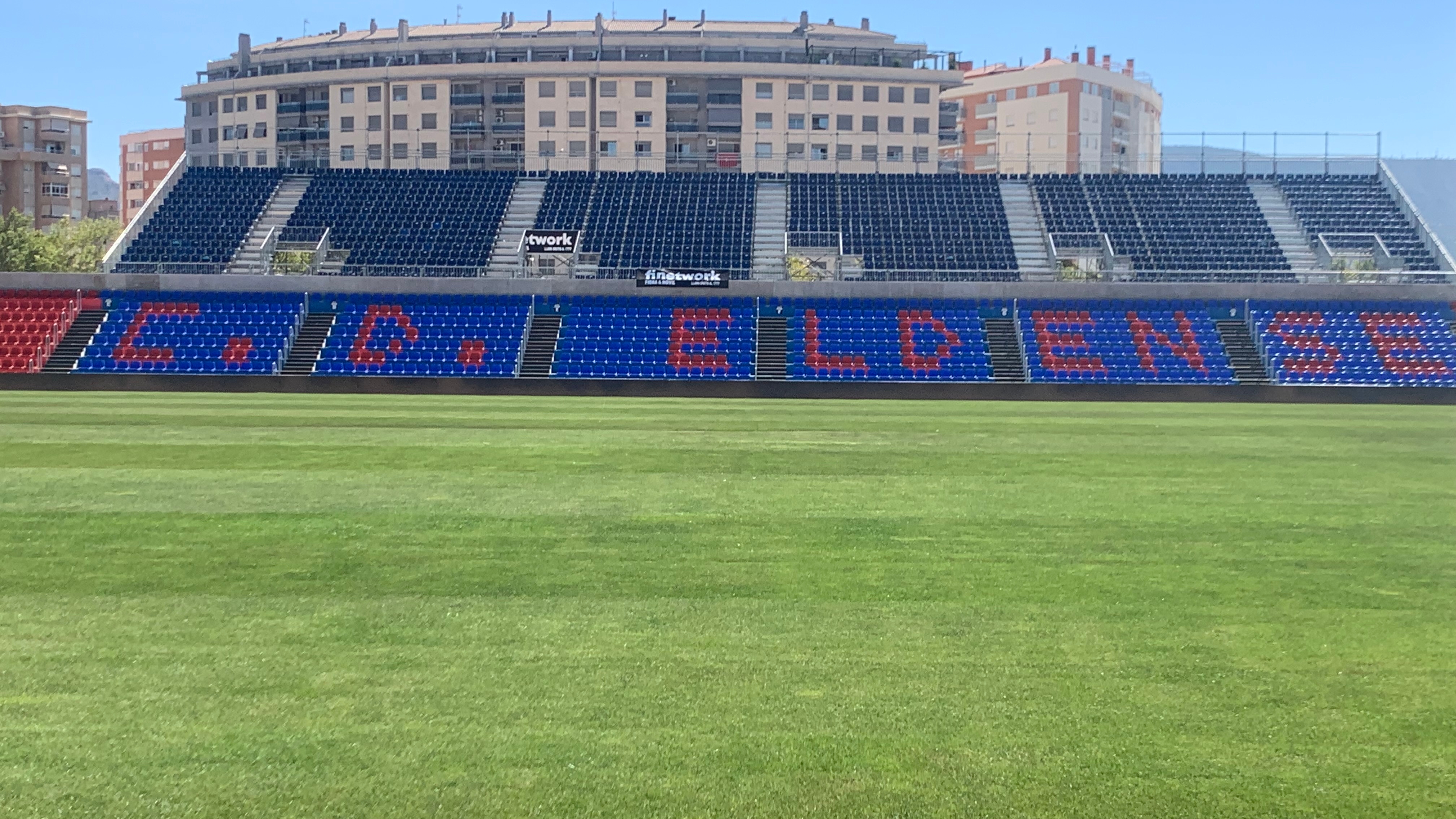
On 16 April, UE Cornellà announced that Lionel Messi had acquired the club. The notice was brief: no price, no percentage and no buyer vehicle. Within weeks, however, the corporate paperwork around Cornellà had started to move.
Thirteen days after the announcement, LM10 Football SL was incorporated in Barcelona with the stated purpose of acquiring, holding and managing company stakes. Its sole shareholder is THIMACI SL and its sole director is Alfonso Nebot. On 15 May, Nebot was granted individual powers of attorney at Cornellà. By June, shareholders had been summoned to vote on fresh capital, share-transfer rules and changes to the board. The registry does not identify LM10 Football as a Cornellà shareholder, so it cannot be called Messi's acquisition vehicle. But the filings show that the takeover was followed quickly by a more structured corporate set-up.
Now comes Eldense. EFE reports that Messi has reached an agreement in principle to become the leading shareholder of the Segunda División club, subject to due diligence, final documentation and approval from Spain's Consejo Superior de Deportes. The price, final stake and legal buyer have not been disclosed.
This is where the story changes. Cornellà was a small lower-league acquisition. Eldense is a professional club that itself changed hands less than a year ago, has just won promotion and sits inside a regulatory system that cares not only about who owns shares, but who ultimately controls them.
Eldense has already been sold once in a year
Pascual Pérez sold all of Eldense's shares in October 2025 for a reported approximately €2.5 million. Contemporary reporting described the buyer as an international investor group associated with Grupo TH, with Carolina Holguín becoming president and Mario Rosas director general. Eldense's own announcement used similarly broad language and referred to sporting agreements with Llaneros FC in Colombia and AC Bellinzona in Switzerland.
The Mercantile Registry is more specific. On 1 April 2026 it recorded Holguín personally as Eldense's sole shareholder. That does not make the public Grupo TH description wrong, but the filings do not explain how the wider group description relates to the legal ownership of the shares. For a professional-club acquisition requiring CSD approval, that distinction matters.
So does the price. The roughly €2.5 million figure belongs to the 2025 transaction and remains a reported, unconfirmed consideration. Eldense's registered nominal share capital was €6.294 million after a 2024 capital increase, but that is not a competing purchase price or a clean valuation of the club. Messi's consideration remains unknown.
Due diligence also has one live issue to resolve. Pérez says he has filed a claim over an alleged €1 million personal loan to Holguín and has requested a precautionary embargo over the shares. Holguín disputes the debt and says the sale is unaffected. No embargo should be treated as granted unless a court says so, but the dispute gives the closing process something concrete to work through.
Messi is buying a different asset
The group that arrived in October 2025 bought a third-tier club. Messi is negotiating for one that has since won promotion back to Segunda División. That changes the revenue base, the visibility of the asset and the level of regulatory scrutiny.
Eldense also benefits from an unusually important municipal relationship. Elda City Council has renewed a sponsorship contract worth €1.161 million for 2026/27 around the Elda te deja huella brand, while continuing to provide municipal facilities for the club's daily and competitive use. The Nuevo Pepico Amat is therefore not real estate that comes with the acquisition. The value sits in a professional football operation with league revenues, local support and a public-sector commercial relationship that materially helps the business.
That makes the speed of the resale worth watching. The 2025 takeover was presented as the start of a long-term international project. Less than a year later, after promotion, Eldense's registered sole shareholder is negotiating an exit to Messi. There is not enough public evidence to say whether the seller is making a profit, recovering capital or simply taking an offer that was too attractive to refuse. The undisclosed price would answer much of that.
Count the clubs carefully
| Club or interest | What the public record supports | What remains unknown |
|---|---|---|
| UE Cornellà, Spain | The club officially announced Messi as its new owner in April 2026. | Exact percentage, consideration and acquisition vehicle. |
| CD Eldense, Spain | Agreement in principle for Messi to become the leading shareholder, subject to due diligence and CSD approval. | Final percentage, price and buyer vehicle. |
| Deportivo LSM, Uruguay | Messi publicly joined Luis Suárez's project in 2025. The underlying Deportivo LS SAD had existed since 2020. | Exact cap table, transfer mechanics and consideration. |
| Leones de Rosario, Argentina | A civil association whose AFA listing names Matías Messi as president. | No public document reviewed establishes Lionel Messi as an owner or shareholder. |
| Inter Miami, United States | Messi is a player and central commercial figure. | The club's official ownership page lists Jorge Mas, David Beckham and Jose Mas, not Messi. Any future equity pathway is not a current holding. |
There is no public document showing one holding company over these assets, a common treasury or a formal feeder system. But Cornellà plus a professional Spanish club is already enough to make the ownership structure important.
Spain's 5% question arrives now
The legal issue is more immediate than a future scenario in which Cornellà and Eldense reach the same division. Article 67 and Article 68 of Spain's Sports Law define 5% as a significant holding in a professional sports entity and require prior CSD authorisation once an acquisition reaches 25%. They also allow the regulator to look through indirect holdings, groups, intermediaries and people acting in concert.
Article 68 goes further. On its face, a person holding at least 5% in an entity participating in professional competition may not simultaneously hold at least 5% in another sporting entity in the same competition or, if different, the same sporting modality or speciality. The RFEF adds a separate competition-integrity rule preventing clubs under common ownership, control or decisive influence from appearing in the same competition.
That does not establish that Messi is in breach of Spanish rules. It does mean the precise Cornellà holding, the Eldense buyer and the rights attached to both positions are questions for the CSD now, not only if the clubs one day meet on a pitch.
Eldense is therefore the point at which Messi's football interests start to require an ownership architecture. The next revealing documents will not be another announcement. They will be the CSD authorisation, the shareholder registration and the acquisition vehicle showing who owns what, through which company and with which rights.
The documents matter more than the portfolio headlines
If those documents reveal a common platform around Cornellà and Eldense, then Messi is building a football group. If the clubs remain legally and operationally separate, the strategy may be looser. Either way, the paperwork is about to tell us more than the portfolio headlines have so far.
Sources
Transaction and corporate records
- EFE, 8 September 2026: Eldense agreement in principle
- Alicante Plaza: reported Eldense sale for approximately €2.5m
- BORME: Eldense sole shareholder Carolina Holguín
- UE Cornellà: Lionel Messi announced as new owner
- EFE: Messi joins Luis Suárez's Deportivo LSM project