Every former player who buys a club is offered the same easy script. He comes home, poses with a scarf, promises to restore former glories and discovers that football ownership is less romantic than it looked from the pitch.
Lukas Podolski has bought Górnik Zabrze partly because it is his club. But the transaction makes more sense as a bet on an underused football business than as a sentimental purchase. He paid PLN 3.9m for the City of Zabrze's controlling shareholding. The more consequential obligation is separate: LP Holding, the German company through which he bought the shares, has committed to put at least PLN 12.6m into Górnik over three years.
That money is not supposed to fund a spectacular summer of transfer-window theatre. The investment agreement approved by the city points to revenue growth, bond redemption and more responsible financial management. Podolski's own early message was equally unglamorous. Górnik, he said, has to be financially stable; the club cannot spend recklessly, and its academy and facilities need patient investment.
The attraction is clear. Górnik has the history, fanbase and location of a far larger football business than its recent revenue suggests. What it lacks is the commercial and operating structure to turn those ingredients into reliable cash, better players and a credible European trajectory. That is the project Podolski has bought.
Why Podolski wanted it
Podolski was born in nearby Gliwice, grew up in Upper Silesia and returned to Górnik as a player in 2021. He already understood the club from the inside when LP Holding bought an initial minority stake in December 2025. By the time the city put its 1,095,297-share block up for sale, he was not arriving as an outside investor with a presentation deck and a plan to flip an asset.
He has framed the takeover as a change in responsibility. Cities should build public infrastructure, he argued before the deal, rather than run football clubs. Górnik should be in good hands, but it should also be run as a club that makes decisions at football speed rather than political speed. After completion, he described himself as a supporter with the language and voice of supporters, not a conventional investor.
That matters because it explains both the appeal and the risk. A local owner with a genuine emotional stake can make decisions with more patience than an absentee financial buyer. The same personal connection can become an excuse for soft governance and unclear accountability. Podolski will have to demonstrate that he has bought the club to build an institution, not simply to protect a beloved one from someone else.
The sale terms give him a serious reason to do so. The city received PLN 3,904,733.81 in three instalments, beginning with PLN 504,733.81 at signing and followed by two payments of PLN 1.7m. That is a price for a share block, not a valuation of Górnik. Grant Thornton carried out the valuation and vendor financial due diligence, which identified a prospective liquidity gap. The obligation to fund the club is therefore the real economic test of the deal.
A big club with a small business around it
Górnik is not a blank canvas. It is one of Polish football's defining historic names, with 14 national titles, and remains the only Polish side to have reached a European Cup Winners' Cup final. The historic claim is not what makes it investable, but it makes the brand meaningful in a country where football identity is unusually local and durable.
More importantly, the current demand is visible. In 2024/25, Górnik averaged 17,129 spectators in the Ekstraklasa, fifth in the division, and filled 70% of its 24,563-capacity stadium. Total attendance across its programme was just short of 300,000. Grant Thornton's annual Ekstraklasa review placed the club fifth for registered supporters and first among Upper Silesian clubs.
Yet it was only ninth in the league's revenue ranking, with PLN 57.5m. That is the gap in the investment case. Górnik already has an audience that many better-financed clubs would want. It has not yet converted enough of that audience into matchday, merchandise, hospitality, partnership and player-development income.
The figures show both promise and constraint. Matchday revenue reached PLN 12.7m and merchandising PLN 5.9m, with both rising. The academy produced PLN 4.2m in income, a meaningful contribution in the Polish market. But a club with this crowd, heritage and regional position should not be satisfied with being a middle-rankingu commercial business. Its income is still a fraction of the level achieved by Legia Warszawa, Lech Poznań and the most successful European qualifiers.
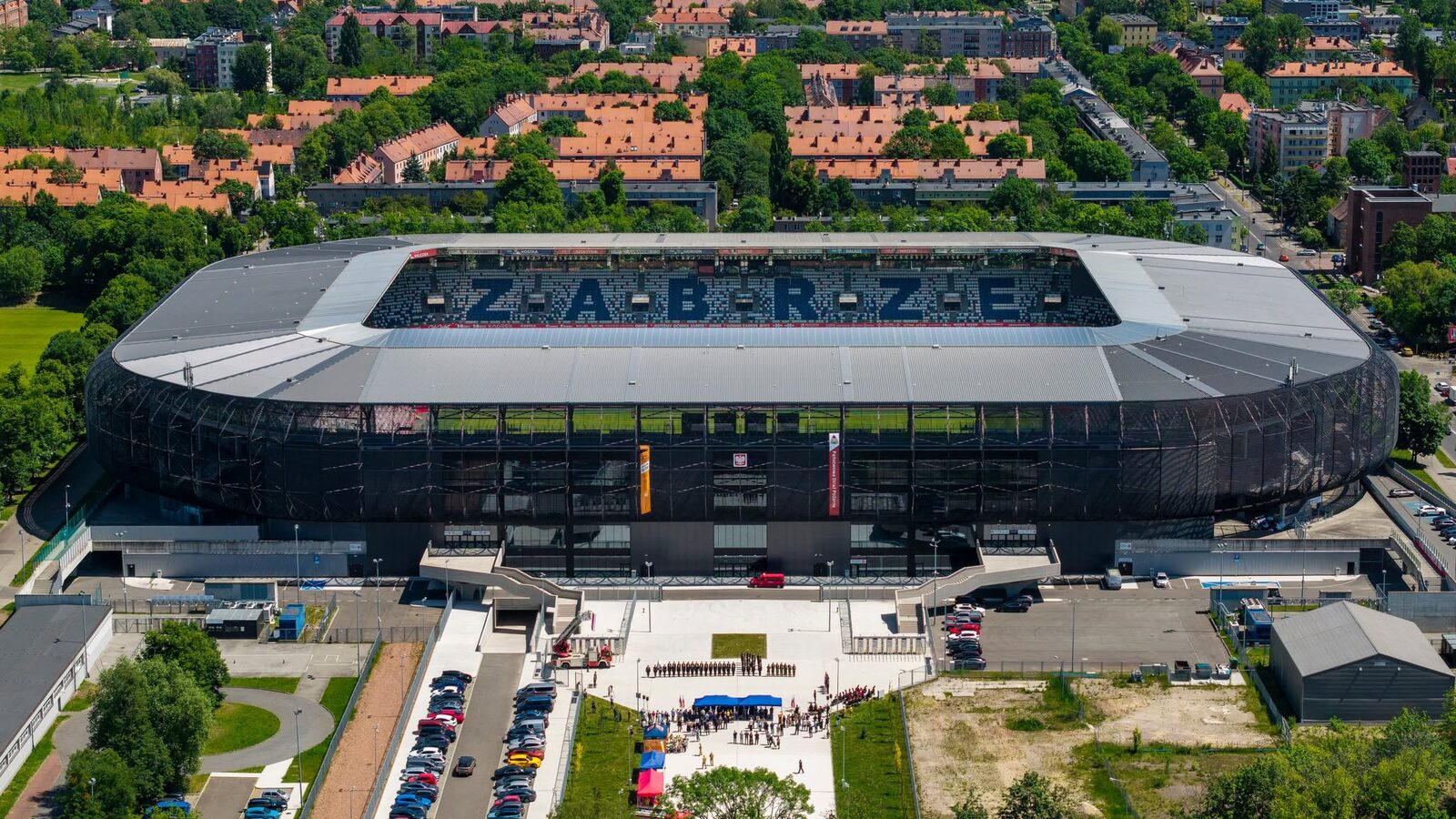
The stadium is the clearest example. Górnik has a substantial modern venue, but the fourth stand has not yet been fully equipped as a hospitality and commercial space. Przegląd Sportowy reported that the club is considering how to finance around 1,500 premium seats, parking and the wider fit-out, potentially through a long-term naming-rights partner. The cost would be far beyond the initial PLN 12.6m commitment. The opportunity is equally tangible: an earlier VIP improvement reportedly paid back after one match, while demand already exceeds the existing supply of boxes.
That is what a properly run club project looks like. It is not simply a question of buying better players. It is finding the commercial bottlenecks that prevent a well-supported club from earning like one, then removing them without allowing costs to race ahead of the income.
The plan is commercial before it is glamorous
There are sporting objectives. Górnik want a stronger squad, more room to retain players rather than sell at the first acceptable offer, and a route into the league phase of European competition. The club's internal development plan reportedly includes sales, marketing and construction work alongside academy improvements.
But the more interesting parts are mundane. Ticket offices are being adapted to sell merchandise and personalise shirts. The club is working on new parking capacity. It is looking at hospitality, stadium naming and the small commercial choices that municipal ownership often leaves unresolved because they sit awkwardly between football and public administration.
Podolski's message has been that higher player budgets will not mean uncontrolled wage inflation. That is a sensible starting point. The 2024/25 Ekstraklasa financial report shows how quickly wage spending can consume the gains from sporting success. A stronger team is essential, but the investment case only works if Górnik creates recurring revenue that can sustain it.
The immediate priorities are therefore more coherent than a player-owner narrative suggests: settle the financial pressure, retain and develop talent, use the stadium as a business rather than a venue that comes alive only on matchday, and make the commercial department capable of monetising the club's real scale.
Podolski is not trying to do it alone
The change is also about the team around him. SportsGlare understands that Podolski has brought Nenad Miljkovic and Lukas Mengeler into the Górnik project to support the club's commercial development. That should be understood as operational support, not as a claim that either man owns Górnik shares. LP Holding remains the legal buyer and no public document reviewed by SportsGlare identifies Miljkovic, Mengeler or Kagami as a club shareholder or lender.
The logic of their involvement is straightforward. Miljkovic is a sports-marketing entrepreneur who founded Rapid Peaks and the venture studio Later Labs, with experience across brands, rights-holders and emerging sports-business models. Mengeler has worked alongside Podolski for years as a photographer and creative, including work with FIFA, UEFA, DAZN, Adidas and Puma. Together with Podolski, they have formed Kagami Studios, whose stated model is to build companies and work hands-on on brand, marketing and commercial growth.
Kagami's public language is revealing. It describes the three as friends who became builders, and says its work is about ownership rather than simply lending a famous face to a campaign. Górnik does not need an agency-style makeover. It needs people who can turn Podolski's name, the club's local credibility and a growing league audience into partner propositions, content, hospitality and a better international profile.
That will be a useful contribution if it stays tied to the club's actual operating needs. There is a big difference between creating an attractive campaign around Górnik and building the systems that make commercial revenue repeatable after the campaign has ended.
Poland is becoming a better place to make this bet
Podolski is not buying into an isolated local story. Polish football has started to look like one of Europe's more credible growth markets. The Ekstraklasa drew almost 3.9 million spectators in 2024/25, a record average of 12,668 per match, and centralised media and marketing rights generated PLN 428m across the league. Commercial revenue reached PLN 408m and clubs collected a record PLN 220m in transfer income.
There is still a large distance to the established western European leagues, and Poland should not pretend otherwise. But the ingredients are more serious than the old caricature of a regional competition: modern stadium infrastructure, a large domestic market, affordable live entertainment, a player-development pathway and a growing European footprint. The league has also expanded distribution into the United States, Canada, German-speaking Europe, Spain and Latin America.
For Górnik, this creates a more ambitious target than simply becoming a well-run Silesian club. It can try to become a recognised Polish platform with international relevance, particularly in Germany, where Podolski's football and business profile gives it a natural bridge. The sensible objective is not to sell a fantasy of global scale. It is to make Górnik one of the clubs able to benefit when Polish football's rising attendance, player trading and media value become durable rather than cyclical.
That requires sporting performance. European competition brings prize money, visibility and new commercial conversations, but it also puts pressure on a squad and budget. The best test of the plan will be whether Górnik can invest in players and infrastructure without needing one good transfer or one European run to cover ordinary operations.
The safeguard that should matter to supporters
The City of Zabrze did not leave empty-handed. It retained one Series A share, and the public pre-agreement documents say the city required protection for the company and club name, the registered office and address, plus the right to appoint and dismiss a supervisory-board member. The council resolution says the negotiated terms preserve Górnik's existing name and headquarters in Zabrze.
The full contracts and statutes are not public, so supporters should not assume the retained share has every veto implied by the phrase "golden share". The enforceable rights still need to be seen. But the structure points towards the better question in football ownership. Rather than treating capital and fan protection as mutually exclusive, clubs can reserve a small set of rights over the identity that no owner should be able to trade away.
That is the model SportsGlare argued for in our analysis of Bayern's Viessmann transaction and 50+1: allow a serious owner an operational mandate, but make the name, crest, colours and permanent home non-negotiable. Górnik could become a useful Polish example, provided the protections are written with genuine legal force rather than left as a political reassurance.
What success would look like
The purchase price will soon be the least interesting fact about this deal. A successful Podolski ownership project would leave Górnik with less financial fragility, a completed commercial stadium offer, a stronger academy pathway and a squad that can compete without gambling its future.
It would also prove that a famous former player can use his name as an asset without allowing the club to become a vehicle for his name. Podolski's personal connection opens the door. The money, the people around him and the quality of the operating plan will decide whether Górnik walks through it.
Sources
Reporting basis: the share sale and funding commitment are supported by City of Zabrze documents and Górnik's completion announcement. SportsGlare's reporting on Nenad Miljkovic and Lukas Mengeler is limited to their commercial support for the project; no public evidence reviewed establishes that either holds Górnik or LP Holding equity, a club loan or investment-agreement rights. SportsGlare reporting, based on direct conversations. Podolski has brought Miljkovic and Mengeler into the Górnik project to support commercial development. Their individual economic interests, if any, are not public and are not stated in this article.
- City of Zabrze, sale-information note, 21 May 2026. Exact sale price and instalments, investment agreement, valuation and due-diligence process.
- Zabrze council resolution. 86.63% city block, retained Series A share, PLN 12.6m commitment and stated protections.
- Górnik Zabrze takeover announcement. Completion of the transaction.
- PAP report of Podolski's first remarks as owner. Financial stability, patient development and academy priorities.
- DPA report on Podolski's reason for buying Górnik. His argument for moving the club out of municipal ownership and his supporter-led rationale.
- Przegląd Sportowy's report on Górnik's nine-point plan. Reported stadium, hospitality, parking, commercial and squad-development initiatives.
- Grant Thornton, Financial performance of PKO Bank Polski Ekstraklasa clubs 2024/2025. Club and league revenues, attendance, fanbase, academy and media data.
- Grant Thornton on the Górnik transaction. Valuation and vendor financial due diligence, including the prospective liquidity-gap finding.
- Kagami Studios launch announcement and team page. The Podolski, Miljkovic and Mengeler partnership and their stated commercial model.
- SportsGlare Football Club Ownership Transaction Ledger: Górnik Zabrze record. The transaction is listed with the seller price and separate future-funding commitment.